Thalia: A Global, Multi-Modal Dataset for Volcanic Activity Monitoring
Abstract
Monitoring volcanic activity is of paramount importance to safeguarding lives, infrastructure, and ecosystems. However, only a small fraction of known volcanoes are continuously monitored. Satellite-based Interferometric Synthetic Aperture Radar (InSAR) enables systematic, global-scale deformation monitoring. However, its complex data challenge traditional remote sensing methods. Deep learning offers a powerful means to automate and enhance InSAR interpretation, advancing volcanology and geohazard assessment. Despite its promise, progress has been limited by the scarcity of well-curated datasets. In this work, we build on the existing Hephaestus dataset and introduce Thalia, addressing crucial limitations and enriching its scope with higher-resolution, multi-source, and multi-temporal data. Thalia is a global collection of 38 spatiotemporal datacubes covering 7 years and integrating InSAR products, topographic data, as well as atmospheric variables, known to introduce signal delays that can mimic ground deformation in InSAR imagery. Each sample includes expert annotations detailing the type, intensity, and extent of deformation, accompanied by descriptive text. To enable fair and consistent evaluation, we provide a comprehensive benchmark using state-of-the-art models for classification and segmentation. This work fosters collaboration between machine learning and Earth science, advancing volcanic monitoring and promoting data-driven approaches in geoscience.
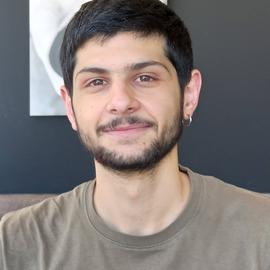
Nikolas Papadopoulos
Phd Candidate
My research is focused on Deep Learning for Earth Observation, with an emphasis on extreme events.
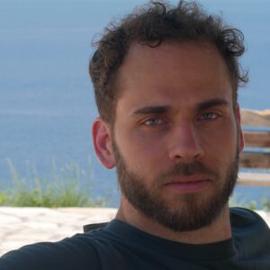
Nikolaos-Ioannis Bountos
PhD Candidate

Maria Sdraka
PhD Candidate
Earth Observation, Deep Learning, Natural Hazard Monitoring, Computer Vision

Andreas Karavias
Phd Candidate
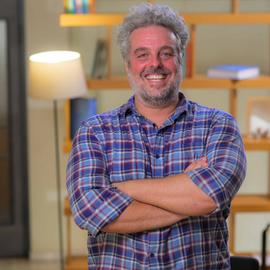
Ioannis Papoutsis
Head of Orion Lab
Assistant Professor of Artificial Intelligence for Earth Observation @ NTUA
Adjunct Researcher @ NOA
Earth Observation, Machine Learning, Natural Hazard Monitoring